You need 2.5-inch pool suction and return pipe size when your pump’s flow rate (GPM) exceeds what 2.0-inch pipe can handle (around 80 GPM), or if you have multiple suction points (like a skimmer and main drain) or a high-demand system (many jets), especially with long runs.
Where 2.0-inch has been a staple for decades it is just to small for today’s pool pumps. Most pool pumps these days are outputting closer to 90 GPM given the wide adoption of high flow rate variable speed pumps and the common inclusion of multiple water features, elevation changes from source water, and lengths of pipe runs all points to 2.0 inch pipe no longer being a standard or fallback.
2.0 inch pipe for pools may have it’s place here and there, even some feature lines and cleaner lines only call for 1.5 inch, but on a main suction or return line, you need the least amount of friction and backpressure, but also dramatically less water velocity when using even the most common VS or 2 speed pump.
Key Indicators for using 2.5-Inch minimum pipe size for pools
To prevent cavitation, reduce head loss, and ensure proper flow for efficiency and pump longevity. A larger pipe size reduces water velocity, meaning less resistance and a happier pump.
- High Flow Rate:
If your pump is rated for over 70-90 GPM, 2.5-inch is often recommended over 2-inch, which typically handles around 78 GPM before velocity becomes too high. - Multiple Suction Lines:
Two 2-inch pipes (2×2″) can equal a single 2.5-inch line, but a single 2.5″ run is often simpler and better for reducing head loss, especially if you have separate skimmer/main drain lines. - Long Distances:
Longer suction runs (pool to equipment pad) increase friction, making larger pipe diameters crucial to avoid starving the pump. - Energy Efficiency:
Larger pipes mean lower friction, less work for the pump, and better energy efficiency. - Pump Type:
Variable Speed (VS) pumps benefit greatly from larger suction lines to optimize their flow capabilities. - Avoid Pump Strain:
Undersized suction piping causes water starvation, leading to pump noise, vibration, and potential damage.
When 2-Inch might be okay, but 2.5″ is better
Shorter runs or very short distances where GPM is modest, 2-inch might suffice, but 2.5″ is still preferable.
Our Recommendation
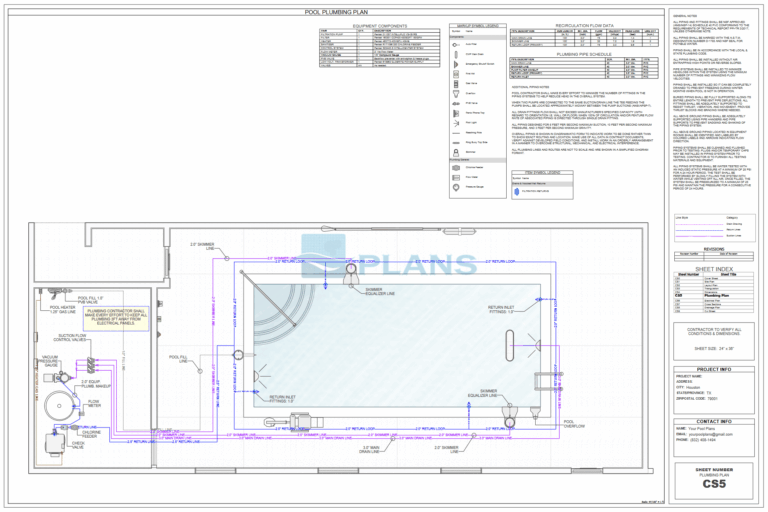
When planning the pool plumbing system for new construction or significant upgrades, aim for 2.5-inch (or larger) suction piping on both suction lines and return lines to future-proof your system and maximize pump performance, and it’s not always possible, but try to plumb your on-pad equipment plumbing makeup with 2.5-inch pipe as well.