The International Swimming Pool and Spa Code (ISPSC) requires specific rescue equipment to be available at class A, B, and C commercial pools to ensure bather safety. In cases where medical responders are not on site, lifeguards, bathers or patrons may need to act quickly to provide rescue and aide to bathers in danger.
The ISPSC outlines the specific safety and rescue equipment as defined in Chapter 4, Section 409.4, of the ISPSC.
Required rescue equipment for commercial pools includes
Reaching Pole
A light, strong, non-telescopic pole not less than 12 feet (3658 mm) long. It must be made of a material that does not conduct electricity and have a securely attached body hook or shepherd’s crook with blunted ends. The ISPSC Chapter 2 Definitions does not provide a specific definition for “shepherd’s crook” but describes its function.
Ring Buoy with Throwing Rope
A ring buoy (or similar flotation device) with an outside diameter of not less than 15 inches (381 mm). It must be attached to a throwing rope not less than 1/4 inch (6.4 mm) in diameter. The rope’s length must be at least 1.5 times the maximum width of the pool or 50 feet (15 240 mm), whichever is less. A “lifeline” is defined in the ISPSC Chapter 2 Definitions as an “anchored line thrown to aid in rescue”.
First Aid Kit
A first aid kit housed in a weather-resistant container.
Additional equipment may be required based on state or local regulations and the pool’s specific operations:
- Rescue Tubes
For use by lifeguards, with a webbed towline and shoulder strap. - Backboard
A backboard with no less than three tie-down straps and a head immobilizer to prevent further injury during transport of an injured swimmer. - Automated External Defibrillator (AED) An AED, with staff trained in its use and CPR, may also be required.
- Emergency Phone/Summoning Device
A dedicated device (phone or monitoring service) must be available and clearly labeled with the pool’s precise location for emergency services.
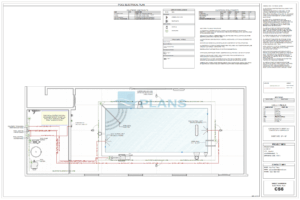
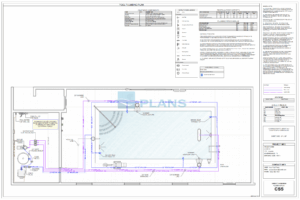
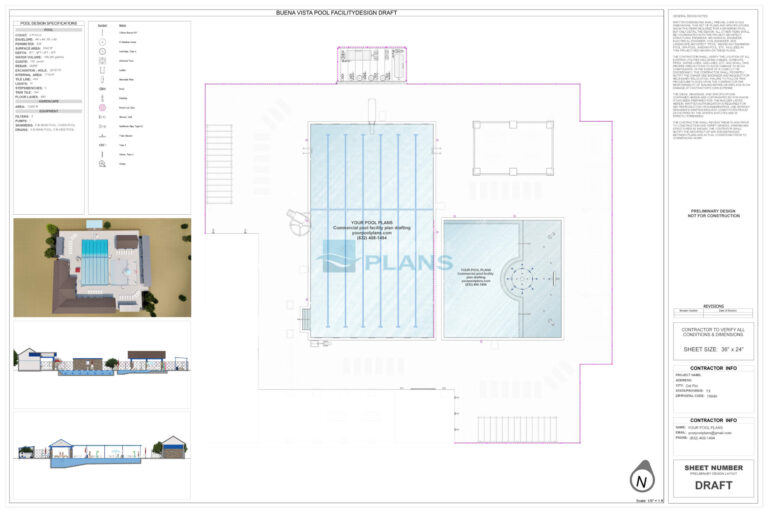
Always check the specific regulations adopted by your local jurisdiction, as they may have additional requirements beyond the base ISPSC code. The specifics to the 409 chapter codes must be shown on commercial pool plan sets explicitly and listed as each individual item with descriptions.